
You've probably noticed it: you put on a particular sweater and suddenly you look healthier, more awake, more you. Then you throw on a different shade and something just feels off — your skin looks sallow, your eyes lose their spark, and you reach for concealer. That's not a coincidence. It's color theory at work.
Seasonal color analysis is the practice of identifying which colors harmonize with your natural coloring — your skin tone, hair color, and eye color — based on the same principles that make nature's palettes so effortlessly beautiful. The system maps every person to one of four seasons (Spring, Summer, Autumn, Winter), each representing a distinct family of colors that share similar undertones, depth, and clarity.
Where Did Seasonal Color Analysis Come From?
The concept dates back to Johannes Itten, a Swiss painter and Bauhaus teacher who noticed in the 1920s that his students instinctively chose colors that harmonized with their own complexion. He connected this to the four seasons — each with its own light quality and palette. In the 1980s, Carole Jackson's bestselling book 'Color Me Beautiful' brought the system into mainstream fashion, and it's had a resurgence in recent years thanks to TikTok and AI-powered tools.
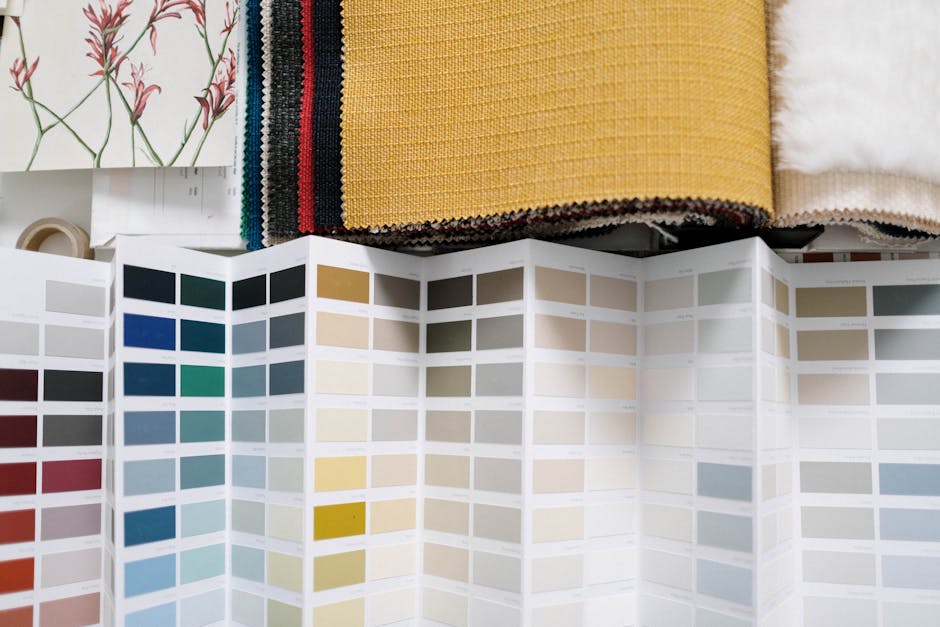
The Four Seasons at a Glance
Think of the four seasons not as rigid boxes, but as color families. Each is defined by three characteristics: undertone (warm or cool), value (light or dark), and chroma (bright/clear or soft/muted).
Spring — Warm, Light, and Clear
Spring types have warm undertones with a light, fresh quality. Think golden sunlight on new leaves. Their best colors are warm and vivid — coral, peach, warm green, golden yellow. Celebrities often cited as Springs include Jessica Alba and Blake Lively.
Spring Palette Preview
Living Coral
#FF6F61
Golden Sun
#FFD662
Fresh Leaf
#88B04B
Rose Quartz
#F7CAC9
Tangerine
#FF8C42
Summer — Cool, Light, and Soft
Summer types have cool undertones with a muted, graceful quality — like morning mist over a lavender field. Their colors are soft and powdery: dusty rose, slate blue, soft plum, sage green. Think Kate Middleton and Emily Blunt.
Summer Palette Preview
Misty Blue
#B5C7D3
Soft Plum
#A0849B
Lavender
#C9B1D0
Powder Blue
#8AACC8
Dusty Rose
#D4B5C7
Autumn — Warm, Deep, and Muted
Autumn types radiate warmth and richness. Their coloring has depth and earthiness — think golden hour through amber leaves. Best colors include olive, burnt orange, chocolate brown, and mustard. Julianne Moore and Beyoncé are classic Autumns.
Autumn Palette Preview
Saddle Brown
#8B4513
Golden Tan
#CD853F
Olive
#556B2F
Dark Goldenrod
#B8860B
Sienna
#A0522D
Winter — Cool, Deep, and Clear
Winter types have high contrast and cool undertones — striking, dramatic coloring like jewels against fresh snow. Their palette is bold: true red, emerald, royal blue, pure white, jet black. Lupita Nyong'o and Amal Clooney are iconic Winters.
Winter Palette Preview
Midnight
#1B1B3A
True Red
#C41E3A
Royal Navy
#003366
Indigo
#4B0082
Teal
#008080
Why Does It Matter?
Wearing your season's colors doesn't just make you look better in photos — it has practical, everyday benefits that compound over time:
- You stop wasting money on clothes that 'looked great on the hanger' but washed you out
- Getting dressed becomes faster — everything in your closet works together
- You need less makeup because your clothes are doing the heavy lifting
- You project confidence because you look put-together without trying hard
- Shopping becomes intentional instead of impulsive
“The right color won't just change your outfit — it'll change the way people see you, and more importantly, how you see yourself.”
How to Get Your Colors Analyzed
Traditionally, seasonal color analysis required an in-person session with a trained consultant who would drape different colored fabrics against your face under controlled lighting — a process that could cost $200-500 and take over an hour.
Today, AI has made it possible to get accurate results from your phone. HueCheck uses computer vision to analyze your skin undertone, the contrast between your features, and the depth of your natural coloring — all from a selfie taken in natural light. The algorithm has been trained on a wide range of diverse skin tones and is designed to match the accuracy of professional consultants.
For the most accurate results, take your photo in natural daylight (near a window is perfect), without makeup, and with your hair visible. Artificial light can shift your undertone reading.
Whether you go the traditional route or use AI, knowing your seasonal colors is one of those rare pieces of self-knowledge that pays off every single day. Once you see it, you can't unsee it — and your closet will thank you.

